
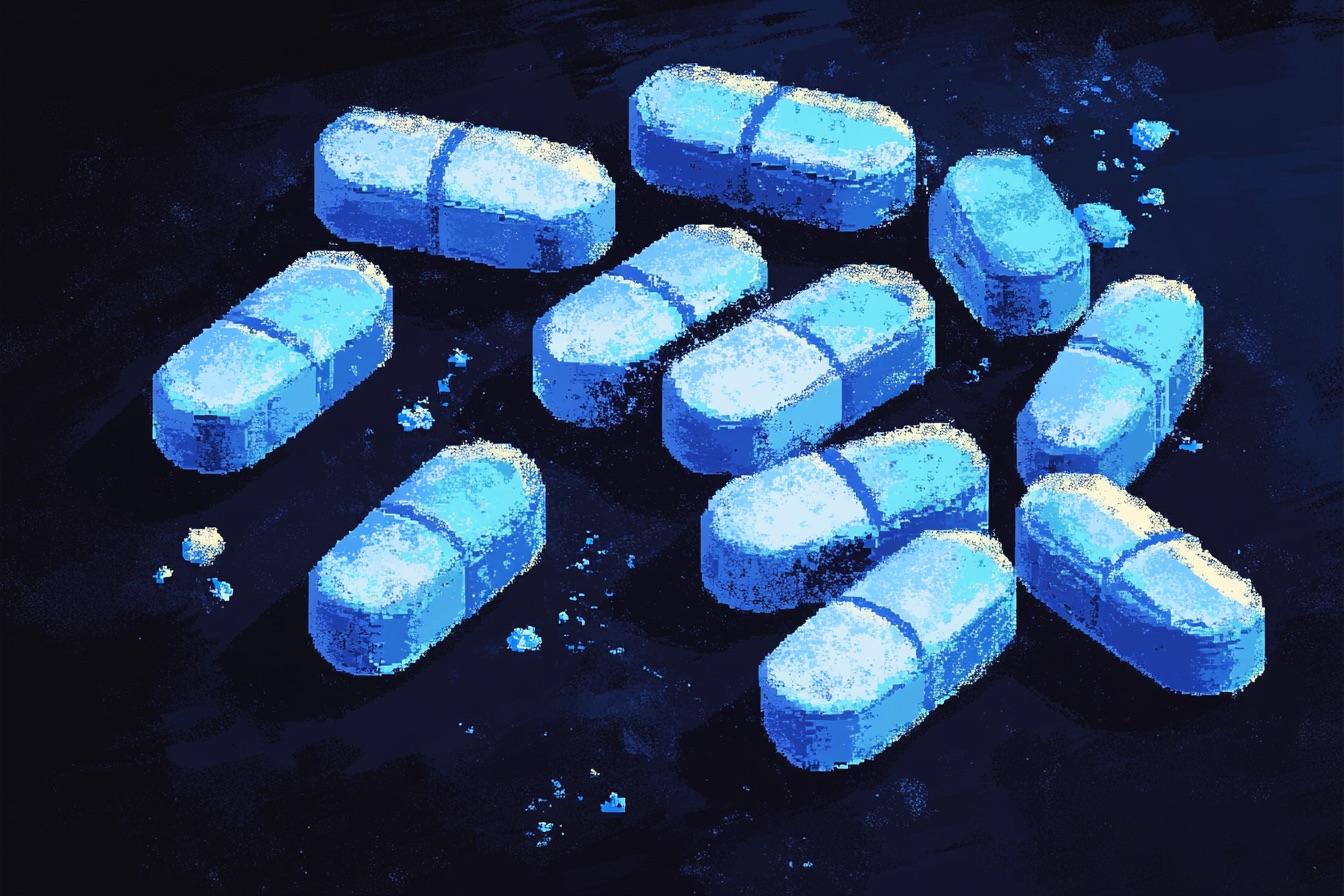
Ketamine is a short-acting dissociative anesthetic first synthesized in 1962 and approved for human use in 1970; pharmacologically, it is a racemic aryl-cyclohexylamine that blocks NMDA glutamate receptors while secondarily boosting AMPA- and BDNF-linked plasticity pathways. PsychonautWiki PMC
Beyond operating rooms, sub-dissociative infusions and intranasal esketamine now offer some of the fastest-acting therapies for treatment-resistant depression and suicidality, often delivering relief within hours. National Institute of Mental Health
Recreationally, low-to-moderate doses warp somatosensory inputs, stretch or compress the flow of time, and can culminate in the famed "K-hole," an out-of-body state prized by psychonauts. PMC PsychonautWiki
Chronic heavy use, however, is strongly linked to ulcerative cystitis and cognitive-memory deficits, underscoring the need for measured dosing and adequate recovery periods. DanceSafe NCBI
Legally, ketamine sits in Schedule III of the U.S. Controlled Substances Act and is variably scheduled worldwide, reflecting both its accepted medical value and potential for abuse. NCBI
2 Dosage & Effect Range
Micro (5–15 mg insufflated / 5–15 mg IM / 25–75 mg oral): Sub-perceptual mood lift; journaling; gentle pain relief
Threshold / Light (15–30 mg insufflated / 15–40 mg IM / 75–150 mg oral): Mild analgesia, soft visuals, social ease
Common (30–75 mg insufflated / 40–100 mg IM / 150–300 mg oral): Classic dissociation, time dilation, creative ideation
Therapeutic (sub-dissociative) (0.2–0.5 mg/kg IV / 40–80 mg IN): Analgesic or antidepressant infusions; guided sessions
High / "K-hole" (100–200+ mg insufflated / 100–200+ mg IM / 300–600+ mg oral): Full detachment, out-of-body experiences, ego dissolution
Oral doses compensate for ~17% bioavailability. PubMed
Intranasal figures reflect esketamine protocols. PMC
Ranges merge clinical (Medscape, StatPearls) and community (PsychonautWiki, Third Wave) guidelines. Medscape NCBI PsychonautWiki Third Wave
3 In-Session Practices: Framing & Flow
- Box-Breathing or 4-7-8 breath (5 min pre-dose): Lowers heart-rate, reduces pre-infusion anxiety
- Intention Journaling (Pre-dose & early come-up): Clarifies purpose; facilitates later integration
- Eye-mask + headphones (music or isochronic tones) (Peak): Deep internal immersion; minimizes external distraction
- Guided movement or yin yoga (During plateau, low-mid doses): Enhances proprioception; eases muscle tension
- Post-session voice memo (10–30 min after): Captures ephemeral insights before fade-out
Combined rituals help direct the dissociative window toward the user’s goal—whether analgesia, creativity, or trauma processing—while reducing emergence anxiety. NCBI Third Wave
4 Subjective Effects & Experience
Ketamine’s come-up is rapid (1–5 min insufflated; seconds IV) and ushers in a floating, pain-numb "body drift." NCBI
Visual field granularity increases, edges shimmer, and at moderate doses proprioceptive boundaries dissolve, leading many to describe "third-person VR" perspective shifts. PsychonautWiki
Temporal perception stretches or fractals—seconds feel elastic, or events repeat in looping "K-waves." PMC
Emotions often detach from narrative content; users may move between childlike euphoria, sober analytical detachment, and occasionally dysphoric voids if set/setting is poor.
Memory encoding is spotty during the peak, but vivid flashes return on descent, making integration work essential. PsychonautWiki
5 Safety & Risk Reduction
- Frequency limits: Space recreational sessions at least two weeks apart to protect bladder epithelium and prevent rapid tolerance. DanceSafe
- Measure precisely: Use a 0.001g scale; small errors scale non-linearly with potency.
- Hydrate & void bladder: Pre- and post-session; chronic users should monitor urinary urgency and seek medical evaluation early. DanceSafe
- Cardio caution: Transient hypertension and tachycardia are common; screen for uncontrolled cardiovascular disease. NCBI
- Poly-drug interactions: CNS depressants (alcohol, benzos, opioids) magnify respiratory depression; stimulants raise cardio-risk. NCBI PsychonautWiki
- Psych risk: High doses can trigger anxiety, derealization, or flashbacks; a calm sitter helps. NCBI
6 Cultural Significance, Historical & Traditional Use
Ketamine replaced phencyclidine (PCP) as a safer battlefield anesthetic in the Vietnam War, cementing its status as a World Health Organization "Essential Medicine." Delray Center PsychonautWiki
By the 1990s its euphoric dissociation spread through rave and club culture, earning monikers like "Special K." PsychonautWiki
Today, ketamine clinics, psychedelic therapists, and DIY psychonaut forums coexist—illustrating a substance straddling mainstream medicine and counter-culture exploration.
7 Legality
- United States: Schedule III controlled substance—prescription required; medical IV and IN formulations are FDA-approved. NCBI
- Canada: Schedule I (Controlled Drugs & Substances Act). PsychonautWiki
- EU / UK: Prescription-only medicine; penalties for unauthorized possession vary (Class B in UK).
- Asia-Pacific: Strictly controlled (e.g., Class A in Singapore, Schedule II in China). PsychonautWiki
Always verify local statutes before possession or travel.
8 Chemistry & Mechanism of Action
Racemic ketamine contains equal R-ketamine (arketamine) and S-ketamine (esketamine) enantiomers; the latter binds NMDA receptors roughly twice as potently. PsychonautWiki PMC
Sub-anesthetic doses produce a glutamate surge in the medial prefrontal cortex, activating AMPA receptors and mTOR-BDNF cascades linked to rapid synaptogenesis—hypothesized to underlie its antidepressant effect. PMC
Ketamine also modulates opioid, GABA-B, and sigma receptors, though these are secondary.
9 Pharmacokinetics & Methods of Use
- IV bolus: 100% bioavailability; onset <1 min; peak 1–5 min; total duration ~30 min
- IM injection: ~93% bioavailability; onset 3–5 min; peak 10–20 min; duration 45–90 min
- Intranasal (racemic): 30–50% bioavailability; onset 5–10 min; peak 20–40 min; duration 60–120 min
- Insufflated (powder): ~45% bioavailability; onset 2–5 min; peak 15–30 min; duration 1–2 h
- Oral / Sublingual: 16–29% bioavailability; onset 15–30 min; peak 30–60 min; duration 2–4 h
Community estimate aligned with insufflation data. NCBI Psychiatric Times PubMed
10 Scientific Research & Emerging Studies
Recent meta-analyses confirm both IV and IN ketamine produce rapid, robust antidepressant responses in 40–70% of treatment-resistant patients, with benefits often evident within four hours. Psychiatric Times PMC
Trials are exploring arketamine for PTSD and chronic pain, while low-dose oral regimens aim to extend accessibility despite lower bioavailability. PMC SpringerLink
Animal studies suggest neuro-inflammation modulation and opioid-independent analgesia, potentially broadening indications to migraine and complex regional pain. ScienceDirect
11 Notable Figures in Media & Science
- Dr. John C. Lilly: Neuroscientist & psychonaut who paired ketamine with isolation-tank experiments, inspiring Altered States and dolphin-communication projects. Wikipedia
- Dr. Carlos Zarate (NIMH): Led landmark trials demonstrating ketamine’s rapid antidepressant efficacy. National Institute of Mental Health
- Dr. Karl Jansen: Coined the term "K-hole" and authored Ketamine: Dreams & Realities. PsychonautWiki
- Dr. Phil Wolfson: Principal investigator in MAPS-sponsored ketamine-assisted psychotherapy protocols.
12 FAQ, Fun Facts & Myths
"Is ketamine an opioid?"
No; while analgesic, it works mainly via NMDA antagonism, not mu-opioid receptors. Verywell Health
"Does micro-dosing work?"
Preliminary observational data (≤15 mg IN daily) show mood-stabilizing potential, but dependence and bladder risks rise with frequency. Third Wave
"Can vitamin C protect the bladder?"
No direct evidence; green-tea EGCG shows preliminary animal protection, but human data are absent. DanceSafe
Fun fact:
Ketamine is on the WHO Essential Medicines List despite its psychedelic reputation. PsychonautWiki